Innovative Payment Methods: What They Are and How They Transform the Purchase Experience

Why innovating today mainly means removing friction
In the digital payments landscape, talking about innovative payment methods does not simply mean adding new options at checkout. Real innovation is about how payments are integrated and managed: less friction for users, smoother mobile continuity, built-in security—and, on the merchant side, more control over costs and performance.
At a time when shopping experiences are increasingly mobile-first and some local solutions are already part of everyday habits, the choice of payment methods has a direct impact on:
- Conversions and cart abandonment
- Customer experience quality
- Operational efficiency (reconciliation, collections management, cash flow)
- Resilience during peaks (sales periods, campaigns, seasonality)
In other words, innovation today does not always coincide with novelty. Often, it results from balancing local habits, digital technologies, and architectural choices that make the experience smoother for users and more governable for businesses.
Innovation is becoming more and more cashless
The latest official ECB statistics for the first half of 2025 clearly show where payments are heading. In the euro area, 77.7 billion cashless transactions were recorded, a 7.7% year-on-year increase, carried out through a mix of payment instruments: credit/debit cards (57%), credit transfers (22%), direct debits (14%), and e-payment solutions (such as wallets and apps, 6%).¹
Within this shift, two very concrete experience signals stand out: on one hand, contactless card payments already account for 83% of in-store card payments (29.6 billion transactions in the semester). On the other, e-money payments continue to grow (4.7 billion transactions, +10.7%), reinforcing the role of wallets and apps in everyday life.¹
Still, for merchants the question is often the same: which trends are truly improving the shopping experience?
The main innovative payment methods: 5 trends you can’t afford to miss
1) Digital wallets (Apple Pay, Google Pay, PayPal, etc.)
Digital wallets are among the quickest levers to make checkout smoother—especially on smartphones. Between 2014 and 2024, these payment tools reached about 66% of global e-commerce transaction value, up from 34% in 2014, and they also came to represent about 32% of in-store transaction value, up from just 3% in 2014.²
The reason is practical: digital wallets reduce friction by limiting manual data entry and relying on a familiar experience (device authentication, fast confirmation, continuity between app and web). In terms of benefits, wallets typically impact:
- Payment speed, especially on mobile
- Fewer errors (fewer fields, less friction)
- Perceived security (thanks to tokenization and on-device confirmation)
They work best when checkout needs to be almost imperceptible: high mobile traffic, new users (less willing to fill long forms), and fast or repeat purchases.
AI and checkout: the next leap in payment experience
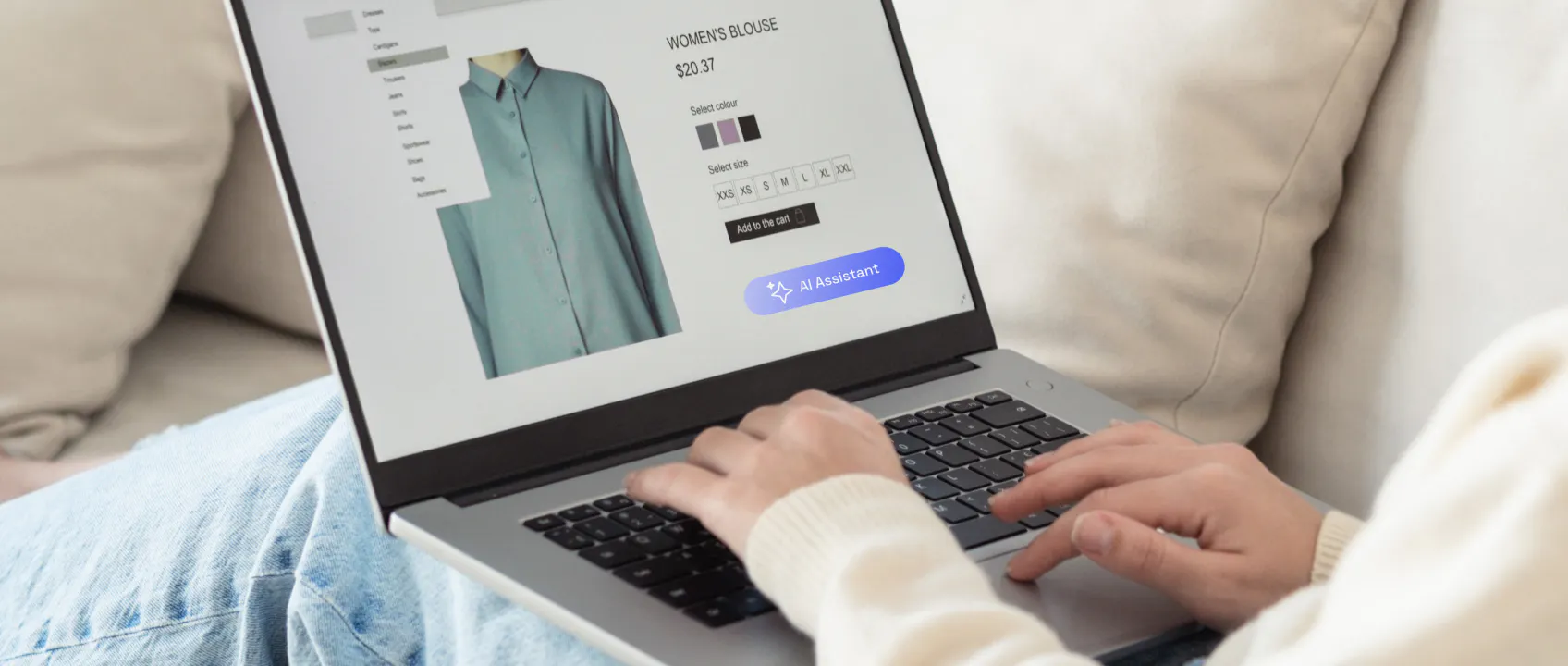
A major revolution in checkout points to AI agents: assistants capable of guiding—or even executing—the purchase by reducing steps, doubts, and friction at the moment of payment. In fact, Visa³ forecasts that by 2028, 25% of interactions with digital storefronts will start through AI agents, pushing journeys toward more conversational and contextual experiences where payment is integrated more naturally. It is no coincidence that in the coming years, more than $1 trillion in spending could be assisted by intelligent agents⁴, starting with routine and repetitive purchases. As these models evolve, checkout will tend to simplify even further: fewer screens, fewer manual decisions, and more continuity within the journey itself.
Source: Visa Intelligent Commerce: AI agents are already shopping | VISA, 2025 – The Future Is (Anything but) Stable | BCG, 2025
2) Instant payments and P2P solutions are becoming payment methods for businesses
In many European countries, instant payments and solutions originally created for peer-to-peer (P2P) are evolving beyond person-to-person transfers. The pattern is clear: first they become an everyday habit for sending money in real time (today, according to the ECB, P2P payments represent 4% of everyday payments by number), and then they start being accepted by merchants as well—especially online.⁵
For businesses, this trend matters because when a P2P method enters commerce, it brings two key advantages: familiarity (users already know it) and immediacy (it feels fast and low-friction, especially on mobile), delivering several benefits:
- They tap into already-established habits, reducing adoption effort
- They shorten checkout, especially on smartphones
- They can act as a bridge toward account-to-account (A2A) payment methods
3) Pay by Bank and PISP: pay from account, with a checkout experience
Pay by Bank (via a PIS service provider) enables pre-filled account-to-account payments: the customer authorizes a transfer—often instant—directly from their online banking or banking app, without using cards and without manually entering payment details.
This type of experience is gaining relevance in Europe because instant transfers are becoming a standard. In that direction, Regulation (EU) 2024/886 on instant payments, in force since April 8, 2024, introduces progressive obligations for payment service providers, with the first key deadlines starting from January 9, 2025.
In practice, this translates into innovative advantages:
- Faster checkout in B2C: fewer fields to complete than many traditional card flows, especially when bank selection and authorization are guided.
- Fewer errors and less corrective work: by reducing manual data entry, interruptions and errors decrease—often translating into fewer retries, fewer support requests, and less manual back-office handling.
- Ideal for B2B transfers: for invoice payments, orders, and high-value collections (where transfers are already standard), bringing account-based payment into a guided, digital checkout reduces friction and steps outside the platform.
- Operational efficiency in specific use cases: especially for high amounts or transfer-based recurring payments, where speed of collection and more orderly reconciliation processes matter.
Pay by Bank with Fabrick
With Fabrick Pay by Bank, account-based payments can be integrated with a smooth and compliant experience, both for eCommerce and B2B scenarios (for example, higher-value transactions).
4) Embedded payments: paying without leaving the experience
If wallets made checkout faster, smart payment solutions take it a step further: they do not just simplify payment, they integrate it into the buying flow so users perceive it as a natural part of the experience.
This category includes:
- In-app payments, without leaving the application
- One-click experiences, designed for repeat purchases, subscriptions, and renewals
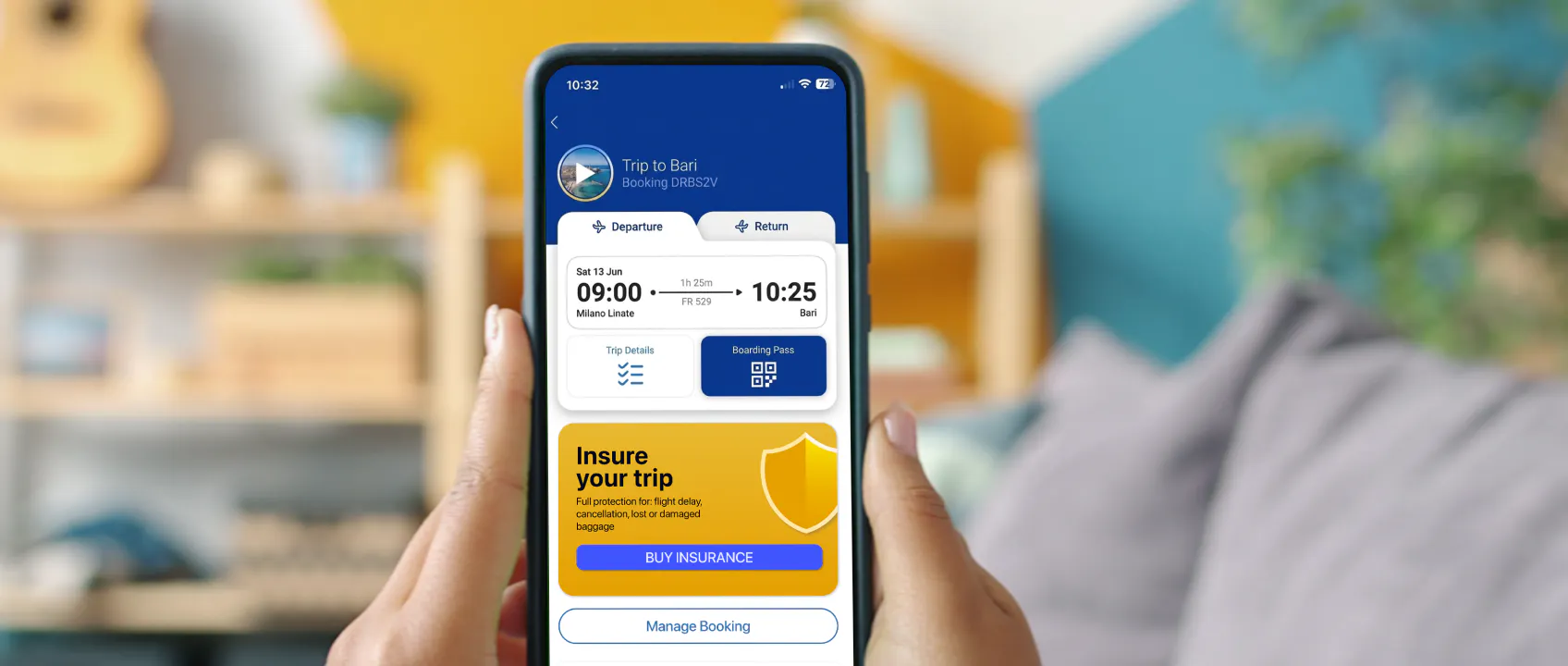
- Embedded payments, meaning payments and services purchased directly within the purchase journey: for example, an insurance coverage offered alongside a smartphone, or financing activated when buying a car—without extra steps, manual forms, or processes outside the platform
The innovative value of embedded payments is less about the method itself and more about how payment is orchestrated within the experience, turning payment from an end-stage into a service enabler: users are not simply paying—they are completing a booking, activating a subscription, confirming a delivery, or closing an order. In these contexts, continuity and trust make the difference: fewer steps and fewer friction points often translate into higher completion, fewer drop-offs, and a smoother perceived experience.
Embedded payments: a key advantage for businesses
Embedded payments are becoming a new standard: according to Juniper Research, the global value of embedded payment transactions will rise from $1.1 trillion in 2024 to over $2.5 trillion in 2028.⁶ And the benefits go beyond user experience: McKinsey notes that integrating financial services into the journey can reduce acquisition costs by up to 30%.⁷
Find out what it means to embed financial services into the B2B journey
Sources: Embedded Payment Transaction Value to Surpass $2.5 Trillion Globally by 2028 | Juniper Research, 2024 – Embedded finance: How banks and customer platforms are converging | McKinsey, 2024
5) Biometric payments: from optional extra to authentication standard
In digital payments, biometrics are becoming increasingly essential when authorizing a transaction, especially on mobile: they speed up confirmation and reduce perceived friction at the most delicate moment of checkout.
The trend also appears in the data. In SPACE 2024 (ECB), 22% of consumers in the euro area indicate biometrics as their preferred method to authenticate online payments.⁵ From another perspective, in physical retail Juniper Research forecasts that the value of biometric transactions will grow to $1.2 billion by 2028.⁸
Key advantages:
- Faster authorization: fewer steps and fewer interruptions, especially on smartphones.
- More confidence at the decisive moment: authentication perceived as secure strengthens the sense of safety without making the experience heavier.
- Smoother checkout: reducing complexity at confirmation helps limit retries and friction, positively impacting overall experience quality.
Payment orchestration: the infrastructure that makes innovation scalable
Innovation in payments is measured above all by the ability to adapt the payment experience to new behaviors, channels, and business models—without turning every evolution into a complex project. That is why payment orchestration solutions are gaining relevance: modular infrastructures that make it possible to integrate and manage payment methods and providers in a consistent way, maintaining control and flexibility over time.
These solutions help businesses:
- Centralize the management of PSPs, acquirers, and payment methods, with a single configuration point
- Standardize integrations and data, making performance and friction points easier to read
- Enable and test new solutions faster, from Pay by Bank to in-app experiences and embedded solutions
Smart routing: a core building block of orchestration
When multiple providers and methods are managed, being able to choose, case by case, the most effective processing route based on variables such as country, channel, device, or amount helps improve success rates and operational continuity. That is what smart routing technology enables.
As the ecosystem becomes more complex, having an end-to-end management infrastructure also makes it possible to continuously optimize what truly matters: experience quality, operational robustness, and the ability to scale across different markets without rewriting the architecture each time. This is the logic behind Fabrick Payment Orchestra, designed to support the evolution of payments over time and enable different experiences with a growth-ready approach.
Innovative payment methods are not a fad: they are the answer to a customer who expects payments that are fast, secure, and integrated into the experience. Competitive advantage today lies in making these innovations coexist in an orderly way—turning complexity into a system that works well for users and remains sustainable for the business.


Sources
Payments statistics: first half of 2025 | ECB, 2026
Global payment report 2025 | Worldpay
Visa Intelligent Commerce: AI agents are already shopping | VISA, 2025
The Future Is (Anything but) Stable | BCG, 2025
Study on the payment attitudes of consumers in the euro area (SPACE) | ECB, 2024
Embedded Payment Transaction Value to Surpass $2.5 Trillion Globally by 2028 | Juniper Research, 2024
Embedded finance: How banks and customer platforms are converging | McKinsey, 2024
Biometric In-store Payments Market: 2024-2028 | Juniper Research, 2024
Our insights

Agentic commerce: how AI agents are transforming online shopping and payments
Embedded insurance: how integrated insurance platforms are reshaping distribution